Getting Started
What types of projects does Alta Construction handle?
We’re a full‑service commercial and retail general contractor handling projects from $50K tenant improvements to multi‑million dollar TI construction projects. Common work includes new builds, remodels, tenant improvements/build‑outs, national rollouts, and specialty spaces.
We’ve completed projects across diverse industries including office buildings, high‑end retail stores, big‑box retail, fitness centers, coffee shops, tea shops, quick-service restaurants, medical and dental offices, cannabis facilities, hospitality venues, veterinary clinics, warehouses, and industrial facilities. Whether you need a commercial renovation contractor or a complete build, our team has the expertise to deliver on time and on budget.
Which locations do you serve?
We’re a licensed multi-state commercial contractor with offices in Corona, CA and New York, NY, serving clients across 15 states nationwide.
Our Service Areas Include:
West Coast:
Arizona, California, Nevada, Oregon, Utah, Washington
East Coast:
Connecticut, Florida, Georgia, New Jersey, New York, Pennsylvania, Virginia
Whether you need a single-location build or a national rollout across multiple states, we have the licensing, local market knowledge, and logistical expertise to deliver consistent quality and results. Our multi-state general contractor capabilities include coordinating permitting across jurisdictions, managing regional subcontractor networks, and ensuring brand consistency from coast to coast.
For multi-site projects, we can help you navigate different building codes, regional cost variations, and local permit processes while maintaining your budget and schedule across all locations.
How do I request a bid or proposal?
Share your project details via our contact form or join our Bid List. Helpful information includes drawings or concept plans, target budget, address, timelines, landlord criteria, and any brand standards.
What should I prepare before contacting you?
The more information you can provide upfront, the faster we can provide an accurate construction quote and proposal. Helpful items include:
- Site address and square footage
- Lease agreement or purchase documentation
- Preliminary floor plans, sketches, or space dimensions
- Target budget range
- Desired completion date or occupancy deadline
- Any brand standards, franchise requirements, or landlord guidelines
- Photos of the existing space (if available)
Don’t worry if you don’t have everything—many clients start the construction consultation process with just an address and general concept. We can help you develop the rest during our initial project planning meeting.
Do you work with franchises and multi-unit operators?
Absolutely. We specialize in franchise construction and multi-site rollouts for national and regional brands. We understand the unique demands of franchise builds: strict brand standards, compressed timelines, budget consistency across locations, and working within established franchise systems and vendor networks.
Our multi-unit construction experience includes managing simultaneous projects across multiple markets while maintaining quality control and budget discipline. We’re familiar with franchise disclosure documents (FDDs), prototype designs, and the approval processes required by franchisors. Whether you’re opening your first franchise location or rolling out your fiftieth, we have the systems and expertise to execute your national rollout efficiently.
Process and Delivery
What does a general contractor do?
We manage the entire build from concept to completion, serving as your single point of contact and eliminating the stress of managing multiple vendors. As your commercial GC and construction project manager, we handle:
- Preconstruction: Detailed cost estimating, budget development, value-engineering analysis, project scheduling, and design review for constructability.
- Permitting & Compliance: Coordination with architects, engineers, and municipal authorities for permit applications, plan reviews, and regulatory approvals.
- Construction Coordination: Subcontractor procurement, scheduling and oversight, daily site management, quality control inspections, safety management, material procurement, and progress tracking.
- Financial Management: Budget tracking, progress billing, change order management, lien waiver collection, and cost reporting.
- Project Closeout: Punch list management, final inspections, certificate of occupancy, as-built documentation, O&M manuals, warranty coordination, and project turnover.
How do you communicate progress?
We use top‑tier construction management platforms such as Procore and Raken for schedules, daily reports, progress photos, RFIs, submittals, and real-time cost tracking—giving you transparent, real‑time visibility into every aspect of your project.
You’ll have 24/7 access to view schedules, budgets, documents, and photos. Your dedicated project manager provides regular updates via your preferred communication method—email, phone, text, or in-person meetings. We believe transparency builds trust, which is why we make project information easily accessible throughout construction.
Can you work in occupied spaces?
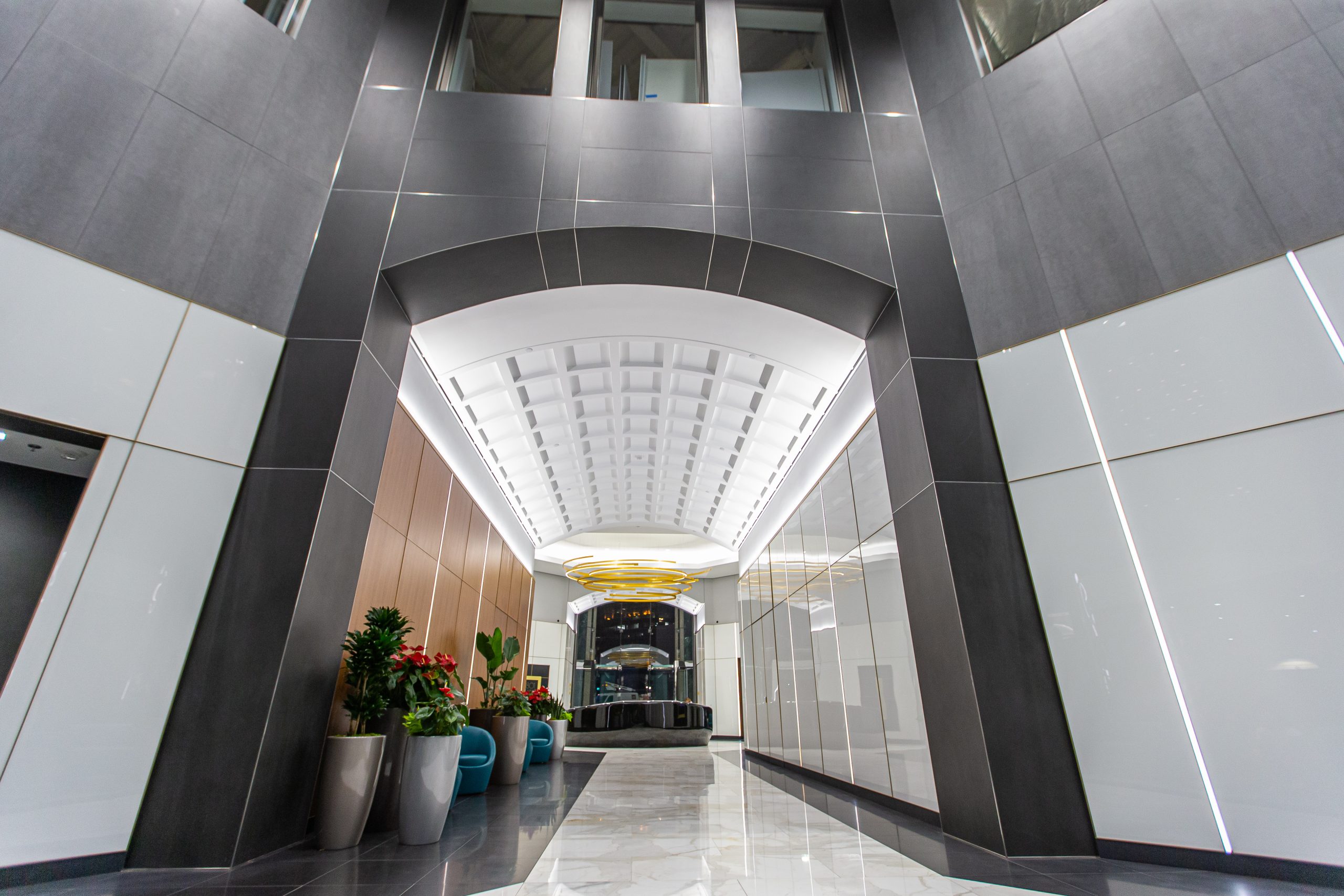
Yes—we regularly perform occupied space construction with minimal disruption to your operations. We’ve completed numerous build-outs in active shopping centers, office buildings, hospitals, schools, and 24-hour facilities where business continuity is essential. You can view some of our completed commercial projects in our gallery!
Our phased construction approach includes: dust containment systems and HEPA filtration, sound barriers and acoustic controls, strategic work sequencing to isolate construction areas, clear wayfinding and safety signage for customers and employees, and coordination with your operations team.
We offer flexible scheduling including after-hours construction, night shifts, and weekend work to avoid your peak business hours. Our teams are trained in occupied-space protocols to maintain professionalism, cleanliness, and minimal disruption while delivering quality results.
What is the typical construction process timeline?
Most commercial construction projects follow this sequence:
- Phase 1: Pre-construction (2-4 weeks)
Initial consultation, site evaluation, preliminary budgeting, design coordination, permitting strategy, and project schedule development. - Phase 2: Design & Permitting (4-10 weeks)
Finalize construction drawings, submit permit applications, secure approvals, and order long-lead materials and equipment. - Phase 3: Construction (6-16 weeks)
Build-out execution, ongoing inspections, quality checkpoints, and punch list resolution. - Phase 4: Closeout (1-2 weeks)
Final inspections, certificate of occupancy, training, documentation turnover, and project handoff.
Total project duration typically ranges from 3-6 months for tenant improvements and commercial remodels, and 8-18 months for ground-up commercial construction. These are general ranges—we’ll provide a detailed project schedule specific to your scope during preconstruction. Our construction timeline is built around your business needs and occupancy requirements.
Can you start before permits are approved?
In some cases, yes—this is called fast-track construction. We can begin certain non-permitted activities while permits are in review, including:
- Demolition of non-structural elements
- Ordering long-lead equipment and materials
- Off-site fabrication of millwork or specialty items
- Site preparation work (depending on jurisdiction)
However, structural work, MEP rough-in, and permanent installations cannot begin until building permits are issued. The benefit of fast-tracking is potentially reducing your overall project timeline by 2-4 weeks, which can be critical for tight opening deadlines.
We’ll assess the risks, potential timeline savings, and any financial implications with you during preconstruction. Our permit timeline experience helps us accurately forecast approval durations and recommend whether fast-tracking makes sense for your project.
Budget, Pricing, and Schedule
How much does commercial construction cost?
Costs vary by scope, market, materials, MEP complexity, site conditions, and schedule constraints. We provide clear, detailed line-item estimates—not vague ballpark numbers—so you understand exactly where your construction budget is allocated. After reviewing your drawings and site specifics, we refine pricing through preconstruction budgeting and value engineering to maximize value.
What factors most affect timeline?
Several factors impact your construction schedule:
- Permitting Duration: Varies by jurisdiction from 2-12 weeks. Complex projects requiring planning commission approval or variances can take longer.
- Long-Lead Equipment: HVAC units (6-16 weeks), electrical switchgear (8-20 weeks), storefronts and glass (6-12 weeks), custom millwork (8-16 weeks), and specialized finishes or fixtures (4-12 weeks).
- Inspections: Required at multiple stages; scheduling and re-inspections can add days to weeks.
- Scope Changes: Change orders and design modifications during construction extend timelines.
- Site Conditions: Unforeseen conditions like concealed utilities, structural issues, or environmental concerns.
- Weather: Impacts exterior work, foundations, and site preparation (more critical in certain climates).
- Typical project timelines: Most tenant improvement projects take 8-16 weeks from permit submission to grand opening, while ground-up commercial buildings typically require 6-18 months. Early coordination, approved submittals, and proactive long-lead procurement help us maintain fast-track construction schedules and compress overall project duration.
Do you offer value engineering (VE)?
Yes—value engineering is a core part of our preconstruction process. VE is a systematic review of your project to identify cost savings and timeline reductions without sacrificing quality or design intent.
During preconstruction, we analyze materials, building systems, and construction methods to find smart alternatives. Common value engineering opportunities include:
- Specifying equivalent but more readily available materials
- Optimizing structural systems to reduce material waste
- Selecting mechanical and electrical systems with better lifecycle costs
- Sequencing work to reduce labor costs and schedule duration
- Identifying prefabrication opportunities
- Suggesting alternative construction methods
Our value engineering process typically saves clients 10-15% on construction budgets while often improving constructability and reducing lead times. We present all VE options with transparent cost impacts and benefits, allowing you to make informed decisions about where to invest and where to save.
How do change orders work?
When scope changes, we issue a written CO with pricing and schedule impact for your approval before proceeding. All COs are logged and tracked in Procore.
Permits, Compliance, and Quality
Do you handle permits?
Yes—while we don’t handle the initial application, we assist owners/architects through their submission and ultimately pull the permit. Our team has established relationships with building departments across our service areas, which helps expedite approvals and navigate plan review comments efficiently.
We coordinate with your design team and local authorities for:
- Building permit applications and submissions
- Plan check review and comment response
- Structural, mechanical, electrical, and plumbing permits
- Fire marshal and life-safety approvals
- Health department permits (for food service)
- ADA compliance review
- All required inspections (foundation, framing, rough-in, final)
- Certificate of occupancy and final sign-offs
We’ve successfully navigated complex permitting scenarios including Type V construction modifications, conditional use permits, ADA compliance upgrades, historic district approvals, landlord and municipal approvals, and multi-jurisdictional coordination.
Our permit expediting experience means we understand how to prepare complete, compliant submissions that minimize review time and avoid costly delays to your project timeline.
How do you ensure safety and quality?
Safety and quality are non-negotiable priorities on every Alta Construction project.
Safety Program: We maintain an excellent safety record. Our OSHA compliance program includes:
- Site-specific safety plans for every project
- Designated safety officers on all job sites
- Pre-construction safety orientation for all workers
- Weekly toolbox talks on safety topics
- Daily safety inspections and hazard assessments
- Subcontractor safety qualification and verification
- Incident reporting and corrective action protocols
- Quality Control:
Our systematic quality assurance process includes:
- Pre-construction submittal review and approval
- Material verification upon delivery
- Quality checkpoints at rough-in, pre-drywall, and pre-final stages
- Third-party testing and inspections as required
- Detailed punch list procedures
- Time-stamped photo documentation in Procore
- Final walkthrough and acceptance
We document everything—from daily progress to quality checkpoints—giving you confidence that construction inspections are thorough and standards are maintained throughout your project.
Can you meet brand standards and landlord requirements?
Absolutely. We’re experienced with national brand guidelines and third‑party landlord criteria for retail and office projects.
Do you handle ADA compliance?
Yes—ensuring ADA (Americans with Disabilities Act) compliance is a standard part of every commercial project we build. Our team stays current with Title III requirements and local building codes to ensure your facility is accessible to all users.
We address all accessibility requirements including:
- Accessible entrances and door widths (minimum 32″ clear)
- Compliant restroom layouts and fixtures
- Proper counter and service desk heights
- Accessible signage (Braille, mounting heights, contrast)
- Parking space dimensions and van-accessible spaces
- Ramp slopes, handrails, and path-of-travel requirements
- Visual and audible alarm systems
For existing facilities, we can perform ADA assessments to identify compliance gaps and provide cost estimates for bringing your property up to current accessibility standards. Whether you’re building new or renovating existing space, we ensure your project meets all federal and local disability access requirements.
Subcontractors and Materials
How do you select subcontractors?
We vet licensed, insured trade partners with proven performance in the project’s market and scope. Our subcontractor selection process weighs multiple factors: competitive pricing, capacity and availability, safety record and OSHA compliance, schedule reliability, quality of past work, and financial stability.
We maintain strong relationships with qualified subcontractors across all trades and markets we serve, ensuring we can assemble the right team for your specific project type and location.
Can you source long‑lead materials early?
Yes—once critical selections are approved, we can release procurement to protect schedule (subject to contract terms).
Can I use my own vendors or subcontractors?
We’re open to working with owner-provided vendors for specialized equipment, fixtures, or services such as IT/AV installation, security systems, specialized kitchen equipment, or branded fixtures required by your franchisor.
However, to maintain safety, quality and schedule integrity, we require:
- All subcontractors must be properly licensed and insured
- Vendor coordination must flow through our project management team
- Work must be scheduled to integrate with our overall construction sequence
- Owner-provided contractors must comply with our site safety requirements
- Clear delineation of scope and responsibility in the contract
We’ll discuss vendor coordination and any owner-provided contractors during preconstruction to ensure smooth integration. Our subcontractor management process ensures all parties are working toward the same timeline and quality standards, regardless of who holds the contract.
How do you handle supply chain delays?
Supply chain management is a critical part of our procurement process. We mitigate material delays through several strategies:
Proactive Planning:
- Early identification and procurement of long-lead items
- Lead-time tracking during preconstruction
- Building schedule buffer for critical-path materials
Supplier Relationships:
- Maintaining relationships with multiple suppliers for key materials
- Regular communication with manufacturers on delivery status
- Access to regional and national supplier networks
Flexible Specifications:
- Specifying materials with good availability when possible
- Identifying approved equals during preconstruction
- Pre-approval of alternative products
If delays occur despite these measures, we immediately: present alternative materials that meet design and budget requirements, adjust the construction schedule to keep other work progressing, provide transparent updates on impacts to timeline and cost, and work with you to make informed decisions about how to proceed.
Our construction materials expertise and supply chain monitoring ensure you’re informed early about any potential issues—no surprises.
Contracts and Insurance
What contract types do you support?
We commonly work under two contract structures and will recommend the best fit based on your project’s level of design completion, timeline requirements, and risk tolerance:
- Lump Sum (Fixed Price): Provides a guaranteed fixed price for clearly defined scope. Best when: construction drawings are 100% complete, scope is well-defined and unlikely to change, and you want maximum cost certainty. You’re protected from market fluctuations and construction risks.
- Cost-Plus: Offers complete transparency with actual costs plus our fee. Best when: design is still evolving, you need to start construction before design is complete (fast-track), and you value full visibility into all project costs. You see every invoice and we add a fixed percentage or fee.
We’ll explain the advantages and risks of each construction contract type and align on the structure that best serves your project during preconstruction. Our goal is a fair agreement that clearly defines scope, price, schedule, and responsibilities.
Closeout, Warranty, and Support
What happens at project closeout?
Project closeout ensures a smooth transition from construction to operation. Our comprehensive closeout process includes:
- Substantial completion inspection with you and your team
- Punch list development and resolution of any outstanding items
- Final inspections from all authorities having jurisdiction
- Certificate of occupancy from the building department
- O&M manuals (operation and maintenance documentation) for all systems
- As-built drawings showing final conditions and any field changes
- Warranty documentation compiled and organized
- Training for your staff on building systems and equipment (as needed)
- Keys, access cards, and system codes transferred
- Final lien waivers from all subcontractors and suppliers
We don’t consider the project complete until you’re fully prepared to occupy and operate your new space with confidence.
What warranty do you provide?
Standard workmanship and manufacturer warranties apply; specific terms vary by scope and materials. We outline all warranty details in your contract and closeout package.
Typical Warranty Coverage
Workmanship Warranty: One year from substantial completion covering defects in our construction work and installation.
Manufacturer Warranties: Vary by product:
- Roofing systems: 10-30 years
- HVAC equipment: 5-10 years (parts), 1 year (labor)
- Plumbing fixtures: 1-10 years
- Electrical components: 1-5 years
- Windows and doors: 1-20 years
- Flooring and finishes: 1-15 years
We provide organized warranty documentation at closeout including manufacturer contact information, warranty registration details, coverage terms and exclusions, and recommended maintenance schedules.
If you experience any construction warranty issues, simply contact us. We’ll assess the situation, coordinate with manufacturers when appropriate, and dispatch our team to resolve the problem promptly. Our post-construction support ensures you have a reliable partner long after project completion.
What training do you provide at project completion?
At closeout, we provide comprehensive training to ensure your team can confidently operate and maintain your new facility. Training typically includes:
Building Systems:
- HVAC controls, thermostats, and scheduling
- Lighting controls and dimming systems
- Security and access control systems
- Fire alarm and life-safety systems
- Building automation (if applicable)
Equipment:
- Commercial kitchen equipment
- Specialty HVAC or ventilation
- Water treatment systems
- Emergency generators and backup systems
Documentation:
- Operation & maintenance manuals for all systems
- Equipment warranty information and registration
- Recommended maintenance schedules
- Emergency procedures and shutdown protocols
- Contact information for service and support
We tailor training to your staff’s needs and provide both hands-on demonstrations and written documentation. Our goal is to ensure you’re not left guessing how systems work after we hand over the keys. All training materials and O&M manuals are provided in both hard copy and digital format for easy reference.
What if something needs repair after completion?
We stand behind our work—our relationship doesn’t end at substantial completion.
If you experience issues during the warranty period:
- Contact us immediately via phone, email, or your Procore project portal
- We’ll assess the issue to determine if it’s a workmanship warranty item or manufacturer warranty claim
- Dispatch our team or coordinate with the appropriate manufacturer/subcontractor
- Complete repairs promptly to minimize any operational impact
- Document resolution and update warranty records
Response Times:
- Emergency issues (safety hazards, system failures): Same day or within 24 hours
- Non-emergency warranty items: Within 3-5 business days
- Routine maintenance questions: Within 24-48 hours
Most workmanship warranty issues are covered for one year from substantial completion. Manufacturer warranties on equipment and materials vary from 1-10+ years depending on the product. We maintain detailed warranty logs and will help coordinate manufacturer warranty claims when needed, acting as your advocate to ensure coverage is honored.
We also offer ongoing maintenance agreements and post-construction support services if you’d like continued partnership beyond the standard warranty period. Our construction warranty service and commitment to client satisfaction are why so many clients return to us for their next project.