

- Wear the Appropriate Clothing
- Provide Fall Protection
- Keep Sites Clean
- Practice Safe Loading and Unloading
- Properly Train Workers
- Handle Equipment Appropriately
- Identify Potential Hazards
- Provide Proper Signage
- Encourage Hydration and Breaks
- Monitor Regulation Changes
- Recognize Local Standards and Conditions
1. Wear the Appropriate Clothing
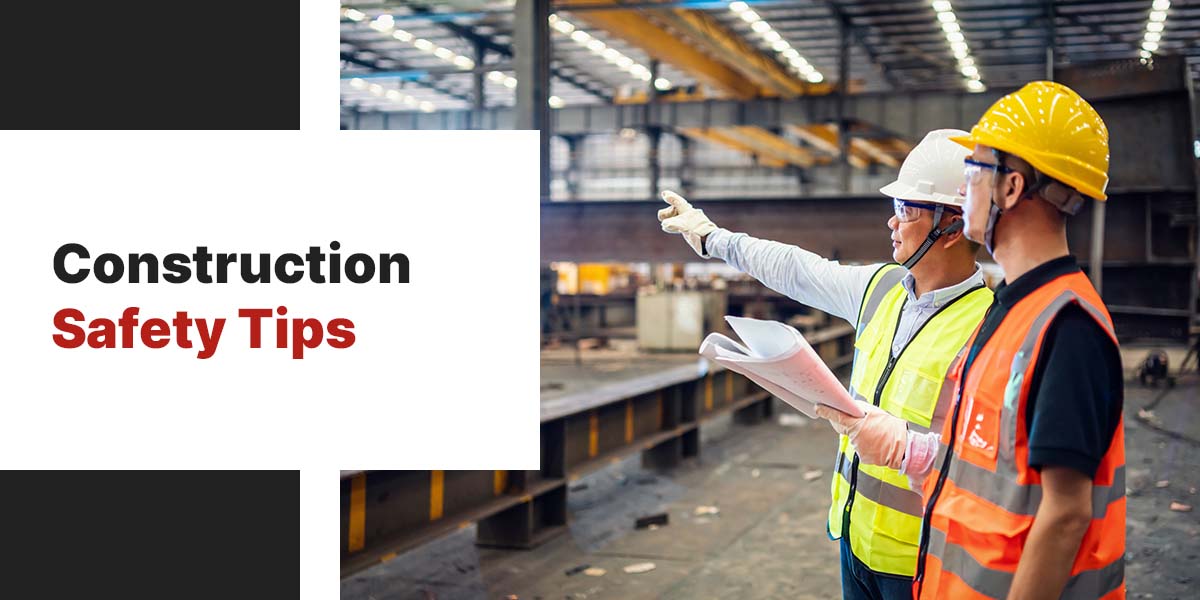
Most construction sites require long-sleeved shirts and pants. Workers should wear clothing that fits snugly. Loose-fitting clothing increases the risk of getting caught in machinery.
The law also requires that employees have access to personal protective equipment (PPE) appropriate for their jobs, such as face shields, hard hats and gloves. Employers should provide this equipment to their employees.
2. Ensure Fall Protection
Falls are the leading cause of death on construction sites, according to reports from the Occupational Safety and Health Administration (OSHA). All employees working above 4 feet should have the proper fall protection equipment available to them. Additionally, employers should provide appropriate training to all employees exposed to fall hazards.
Fall protection equipment should comply with these guidelines:
- Guardrails should be 39-45 inches above the walking/working level and should be able to withstand at least 200 pounds of force in any direction.
- Midrails, mesh or screens should be installed between the guardrails and platform if there is no wall at least 21 inches high behind the railing. Additionally, midrails should withstand 150 pounds of force applied in any direction.
- Safety nets should be installed a maximum of 30 feet below the working surface and must withstand 400 pounds of force. Site managers should perform drop tests using sandbags at least once every six months.
- Lifelines should have a minimum breaking point of 5,000 pounds per worker. So if two workers are attached to the same lifeline, it should be able to handle 10,000 pounds of force before breaking.
Before using any fall protection equipment, you should make sure it’s in working condition. Employees should look for tears or breaks and check that they can fasten all buckles and latches securely. Encourage team members to notify the site manager if they encounter any issues.
3. Keep Sites Clean
Keeping your construction site clean and free of clutter eliminates risks such as trip and fire hazards. Your work area should have the appropriate receptacles for each type of waste. For example, garbage bins and containers for flammable or dangerous materials should have covers. Place empty waste containers at regular intervals to prevent them from building up and creating a safety hazard.
To ensure the safe transport of materials, remove debris like scrap lumber, especially if it has protruding nails or sharp edges, from any passageways, staircases or work areas. Additionally, keep storage areas clear of materials that could pose a hazard or harbor pests, like food waste or other organic debris.
4. Practice Safe Loading and Unloading
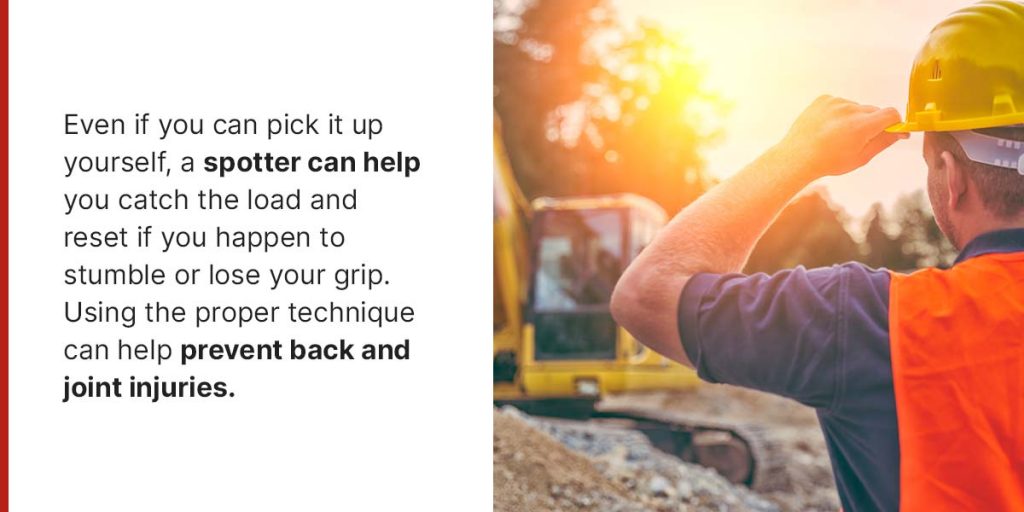
Just like in the gym, construction workers have someone with them when lifting heavy objects at work. Even if an individual can pick up the object by themselves, a spotter can help catch the load if they happen to stumble or lose their grip.
Using the proper technique can help prevent back and joint injuries. Here’s the appropriate technique for lifting and carrying heavy objects:
- Plan the lift: Figure out the weight and destination of the object needing lifting. Ensure a clear path, and have a spotter ready and an action plan in place.
- Warm up: Even a few minutes of dynamic stretching can significantly lower your risk of injury. Encourage workers to jog in place or to increase their heart rate, then perform some gentle stretches.
- Lift: Workers should get as close to the object as they can. Keeping their back straight and head up, workers can then squat down with their knees over their toes and grip the object. They should push upward with their legs to pick the object up.
- Carry: Team members should have a good grip on the object and carry it to its destination by taking small steps. If they need to change directions, the worker should lead with their feet to avoid twisting the upper body.
- Set it down:Employees should make sure there’s a clear, safe place to set the object down. The spine should be in a neutral position with the core engaged. Knees should still be in line with the toes.
5. Properly Train Workers
All workers should receive proper training for their industry. Providing this training both minimizes the risk of construction injuries and prepares employees to respond to emergencies when they arise. Job site safety training includes:
General training: New hires must receive training before beginning their jobs or handling any equipment. OSHA encourages hands-on training whenever possible to ensure workers are comfortable. For example, forklift operators should learn both by studying written materials and by physically using a forklift.
- Refresher training: Employers should provide refresher training on a regular basis to remind employees of important procedures and safety measures. Similarly, workers should receive additional training whenever industry or company policies change.
- Emergency training: All employees should learn emergency and evacuation procedures. This training should occur upon implementing an emergency plan, any time a process changes and any time an employee’s responsibilities change. For companies with more than 10 employees, a hard copy of all emergency procedures taught in training should be readily accessible.
6. Handle Equipment Appropriately
Only employees who have completed the necessary training should operate equipment and only use it for its intended purposes. Employees should also inspect all equipment and machinery before each use, looking for any signs of wear. If the worker notices damage or improper equipment function, they should refrain from using the equipment and alert the site manager of the problem, so they can either fix it or provide a replacement.
7. Identify Potential Hazards
At the start of each day, inspect your site for any potential risks or hazards. These can include any of the following:
- Leaks of dangerous materials
- Faulty equipment
- Cluttered work surfaces
- The presence of pests like rats or termites
Always alert supervisors and other team members to any hazards. Then, take the proper steps to fix or eliminate the hazard.
8. Provide Proper Signage
OSHA standards require that all job sites have proper signage, including both hazard signs and directional non-hazard signs. Signs should appear anywhere that makes sense, including where conditions change. For example, a “Danger: Hard Hat Area” sign should appear before the worker reaches the point where they would need to put on their hard hat.
Important text like “Danger” or “Caution” should be clearly legible from 5 feet away. Similarly, signs should adhere to OSHA standards for size and color, which are universally applicable across all sites. By visually alerting employees to unsafe conditions, you can help prevent injuries.
9. Encourage Hydration and Breaks
OSHA reports that thousands of individuals become sick from heat stress every year, even though the illness is preventable. Maintaining proper hydration and taking regular, scheduled breaks are fundamental to preventing heat stress, fatigue and other heat-related illnesses on construction sites.
Some safety tips for construction workers include:
- Ensure easy access to drinking water throughout the day.
- Implement policies to encourage frequent water intake.
- Provide shaded, cool areas for breaks.
- Encourage workers to avoid excessive caffeine and sugary drinks when working.
- Train team members to recognize the signs of heat stress and dehydration in themselves and others.
10. Monitor Regulation Changes
Job site safety topics undergo frequent changes and reflect new regulations. Continuous investment in ongoing training is crucial for a well-prepared workforce. Regular training sessions ensure all personnel, from new hires to seasoned veterans, understand new heavy equipment safety topics and implement the latest safety protocols and hazard recognition. Training should include refreshers on basic first aid, fall protection, confined space entry and proper use of protective equipment.
11. Recognize Local Standards and Conditions
It’s also important to note that construction projects must always account for unique local standards and environmental conditions. For instance, some regulations and construction safety tips in Southern California differ from those on the East Coast.
In Southern California, teams need a deep understanding of seismic building codes to mitigate risks associated with earthquakes. Additionally, the region’s typically dry climate can increase fire hazards, necessitating fire prevention measures. Workers should also have training on protocols for extreme heat days, which are common in the summer. Awareness of local wildlife, specific environmental regulations, like dust control, and community-specific ordinances further ensures compliance and enhances overall site safety.
Build Safely With Alta Construction
Encourage safety on construction job sites by implementing safety measures and fostering a culture of vigilance. Prioritizing safety saves lives.
At Alta Construction, we help clients in California and New York achieve their construction goals seamlessly. As a full-service construction firm, we value safety and bring that, along with our expertise and personalized services, to every project. We work with a wide range of clients and would be happy to help you with your construction needs. Contact us online for more information.